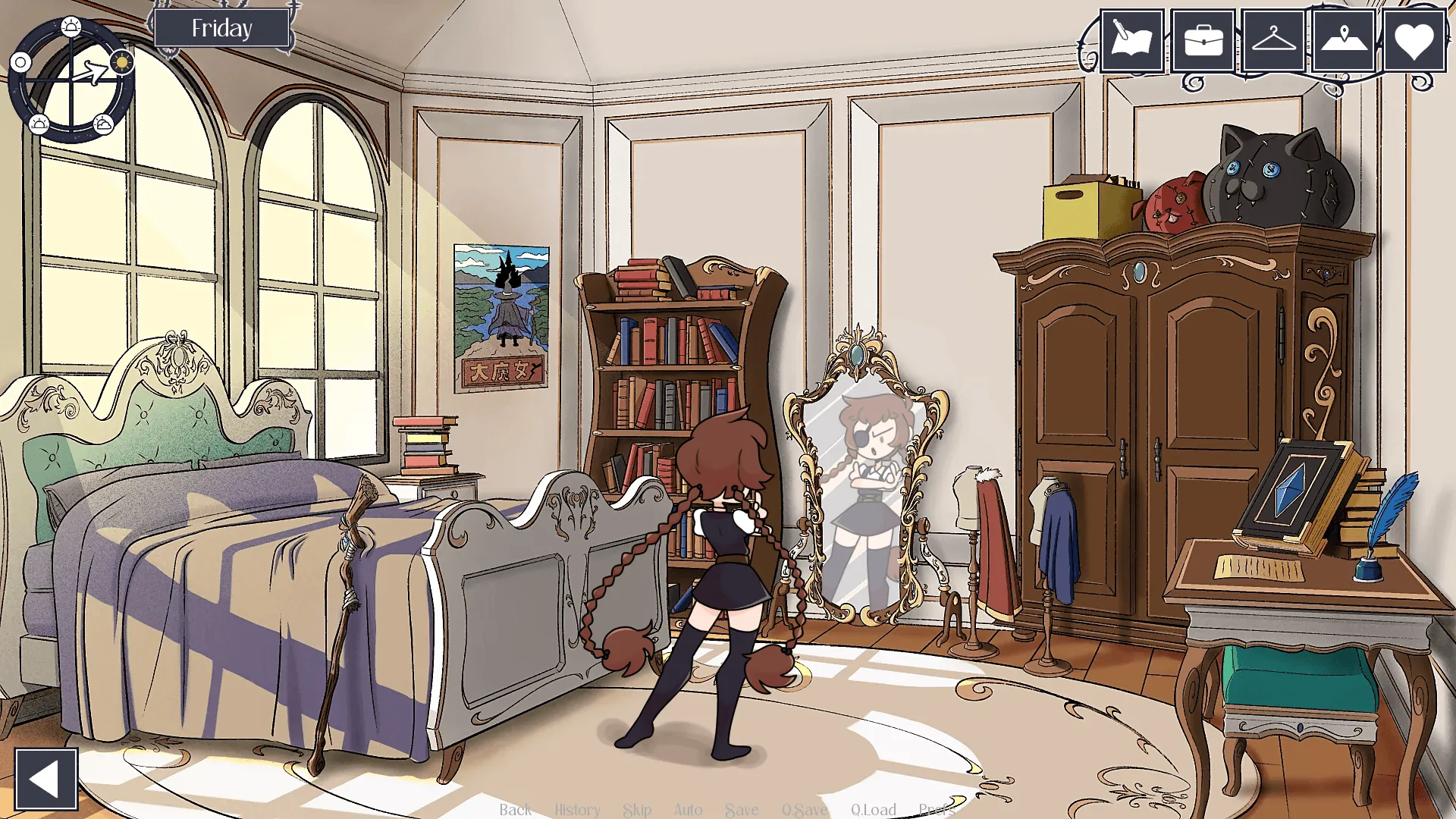
Seducing the Devil
Play Seducing the Devil
Seducing the Devil Screenshots











Seducing the Devil review
Explore narrative branches, character interactions, and gameplay mechanics in this adult visual novel
Seducing the Devil stands out as a narrative-driven adult visual novel that combines choice-based storytelling with character-driven gameplay. The game features an expansive roster of 16 distinct female characters, each with unique personality traits and relationship arcs. Players navigate through multiple narrative branches, making decisions that directly impact character relationships and unlock different story outcomes. Whether you’re interested in understanding the game’s mechanics, exploring character dynamics, or discovering the various narrative paths available, this guide provides comprehensive insights into what makes this title a notable entry in the visual novel genre.
Game Overview: Understanding Seducing the Devil’s Core Mechanics
Picture this: you’re playing a story-driven game, deeply invested in a conversation with a mysterious character. You’re presented with two dialogue options: one kind, one harsh. You choose, the character reacts… and then the story chugs along exactly the same way it would have regardless. That moment of choice felt empty, meaningless. That, my friend, was my biggest pet peeve with narrative games—until I found Seducing the Devil. 🎮
This game isn’t just another visual novel; it’s a masterclass in consequence and connection. Every whispered secret, every bold flirtation, and every tactical decision genuinely matters. The entire experience is built on a foundation of intricate Seducing the Devil game mechanics that transform you from a passive reader into the active architect of your own tantalizing, treacherous tale. Forget about passive storytelling; here, you’re in the driver’s seat, and the narrative road forks in dozens of captivating directions.
Ready to understand the engine that makes this all possible? Let’s dive into the core of what makes this experience so uniquely compelling.
What Makes This Visual Novel Unique
So, what separates Seducing the Devil from the crowded shelf of visual novels? It’s the seamless, almost terrifyingly responsive fusion of its systems. Many games offer choices; some even track relationships. But here, these elements aren’t just features—they’re the DNA of the story itself. The visual novel choice system is the heartbeat, and character relationship tracking is the nervous system, constantly feeding data back to shape your world.
I remember my first playthrough. I approached it like I would any other game, making choices based on my momentary whims. I lied to one character to protect another, chose to pursue a romantic moment instead of investigating a critical clue, and generally played the charming rogue. The game didn’t just remember these choices; it wove them into the very fabric of the narrative. Characters I had neglected became cold and distrustful, blocking off entire subplots. A seemingly minor white lie in Chapter 2 was thrown back in my face by a furious ally in Chapter 5. The game had been quietly tracking everything, building a unique profile of my “player character” that was entirely different from anyone else’s.
This is the magic of its narrative branching gameplay. It’s not about picking “Good” or “Evil” from a menu. It’s about defining your character through hundreds of micro-decisions that collectively determine:
* Who trusts you.
* Who desires you.
* Who sees you as a tool, a rival, or a genuine partner.
* Which of the game’s many secrets are revealed to you.
The adult visual novel features are integrated with similar sophistication. They aren’t isolated scenes but are treated as pivotal narrative milestones, directly unlocked and shaped by the depth and nature of your relationships. You don’t just “get” a scene; you earn it through careful dialogue, consistent behavior, and built trust (or delicious manipulation). This respectful integration makes those moments feel like a natural, impactful result of your journey, rather than a disconnected reward.
Character Roster and Relationship Systems
At the heart of this reactive world are the sixteen stunningly crafted Seducing the Devil characters. This isn’t a mere harem of interchangeable love interests. Each character is a fully realized individual with her own motivations, fears, secrets, and personal history that may intertwine with the central mystery in unexpected ways. Your goal isn’t just to seduce; it’s to understand, connect with, and ultimately navigate the complex web of alliances and affections between them all.
The character relationship tracking system is your invisible notepad, the game’s meticulous memory of every interaction. Think of it as a multi-layered score for each character. A simple “Like/Dislike” meter could never capture the nuance here. Instead, your standing is measured across several invisible axes, such as:
* Trust: Do they believe your words and rely on you?
* Affection: Do they harbor romantic or deep personal feelings for you?
* Respect: Do they see you as a competent equal, or a pawn?
* Lust: Is the attraction purely physical and intense?
Every dialogue choice, every gift given, every story decision you make that involves them sends ripples across these hidden metrics. Compliment a proud warrior on her strength (Respect ↑), and she may open up about her vulnerabilities. Offer strategic help to a cunning tactician (Trust ↑), and she might share a crucial piece of intelligence. Or, indulge in a purely flirtatious exchange with a hedonistic spirit (Lust ↑), potentially opening a passionate but less emotionally intimate path.
Pro Tip: Don’t try to be everyone’s hero on your first run. I learned this the hard way! Pick 2-3 characters whose personalities or stories genuinely intrigue you and focus your efforts. The dialogue choice consequences are more profound and rewarding when you invest deeply in a few relationships rather than spreading yourself too thin.
To give you a sense of this diverse cast, here’s a glimpse into the tapestry of personalities you’ll engage with:
| Character Name | Archetype & Personality | Relationship Focus |
|---|---|---|
| Morgana | The Enigmatic Leader: Calculating, ambitious, and shrouded in mystery. | Building Trust & Unlocking her guarded vulnerability is key. |
| Seraphina | The Idealistic Warrior: Honorable, fierce, and bound by a strong moral code. | Earning Respect and appealing to her sense of justice. |
| Lilith | The Hedonistic Trickster: Playful, seductive, and thrives on chaos and pleasure. | Engaging with her playful Lust and accepting her chaotic nature. |
| Vivian | The Scholarly Archivist: Intelligent, curious, and slightly awkward, keeper of forbidden knowledge. | Showing genuine intellectual curiosity to build Affection and Trust. |
| Astrid | The Loyal Guardian: Stoic, protective, and deeply devoted to her cause. | Demonstrating reliability and shared purpose to forge a bond of Trust. |
| Isolde | The Melancholy Artist: Creative, emotional, and haunted by a poetic sadness. | Connecting through empathy and appreciating beauty to spark Affection. |
| Kaelin | The Ambitious Rival: Competitive, proud, and sees you as a benchmark to surpass. | A complex dance of earning Respect while managing competitive tension. |
| Elara | The Gentle Healer: Compassionate, nurturing, and seeks harmony above all. | Showing kindness and a desire to heal wounds to build deep Affection. |
| Draven | The Cynical Mercenary: Pragmatic, sarcastic, and motivated by tangible rewards. | Appealing to pragmatic interests and proving mutual benefit builds a unique Trust. |
| Lyra | The Free-Spirited Dancer: Energetic, impulsive, and lives entirely in the moment. | Embracing spontaneity and fun to fuel a relationship based on Lust and joy. |
| Selene | The Mystic Seer: Spiritual, cryptic, and connected to otherworldly forces. | Being open to the unexplained and accepting her visions to gain her Trust. |
| Gwen | The Charming Diplomat: Charismatic, persuasive, and master of social politics. | Engaging in verbal sparring and social strategy to earn Respect and intrigue. |
| Thalia | The Disgraced Noble: Proud, resourceful, and seeking to reclaim her lost status. | Offering strategic alliances and understanding her ambition builds Affection and Trust. |
| Beatrice | The Inquisitive Engineer: Inventive, logical, and fascinated by mechanics and magic. | Showing appreciation for her intellect and creations fosters Respect and connection. |
| Ravenna | The Shadowy Assassin: Silent, efficient, and reveals little of her true self. | The ultimate challenge; earning even a sliver of Trust requires patience and shared silence. |
| Freya | The Wild Huntress: Instinctual, fierce, and deeply connected to the natural world. | Showing survival prowess and respect for nature to gain her Loyalty and Respect. |
Narrative Branching and Player Choice Impact
This is where the magic truly comes to life. The narrative branching gameplay in Seducing the Devil isn’t about a few major forks in the road. It’s about navigating an ever-expanding, dense forest of possibilities where every small path you choose closes off others and opens up new, unseen trails. The game’s plot is less a single thread and more a tapestry you’re weaving in real-time, with the colors and patterns determined entirely by your interactions with the Seducing the Devil characters.
The visual novel choice system is deceptively simple in presentation—you’ll typically see 2-4 options in dialogue—but devastatingly complex in its execution. Each choice is a pebble dropped into a pond. The ripples affect:
1. Immediate Character Reaction: The character’s next line of dialogue.
2. Hidden Relationship Metrics: As discussed, tweaking Trust, Affection, etc.
3. Story Flags: Invisible switches that get flipped, marking certain events as “known” or “completed” in a specific way.
4. Long-Term Plot Availability: Entire scenes, chapters, and endings are gated behind specific combinations of story flags and relationship thresholds.
Let me give you a concrete, spoiler-light example from early in the game that perfectly illustrates this web of dialogue choice consequences.
The Scenario: You attend a grand masquerade ball, a key social and investigative opportunity. Early on, you see Character A (let’s say the loyal guardian, Astrid) arguing quietly but intensely with Character B (the ambitious rival, Kaelin) in a secluded alcove. You have a moment to intervene before they notice you.
Your Choices & The Branches:
* Choice 1: Interrupt directly, siding with Astrid. You publicly support her, embarrassing Kaelin.
* Consequence: Astrid’s Trust and Affection rise significantly. She now sees you as a steadfast ally. Kaelin’s Respect for you may take a complex hit—she might be angered or see you as a more serious rival. This opens a branch later where Astrid confides a crucial secret to you much earlier, but may permanently sour your chance for a cooperative path with Kaelin. A later story mission where you could have worked with Kaelin is now replaced with a more confrontational version.
-
Choice 2: Interrupt directly, siding with Kaelin. You back her pragmatic viewpoint.
- Consequence: Kaelin’s Respect for you increases (you understand ambition). Astrid feels betrayed, her Trust plummets. She becomes professionally distant. This unlocks unique dialogue options with Kaelin for strategic collaborations later, but may cause Astrid to withhold vital protective support in a future crisis, forcing you to find a riskier, alternative solution.
-
Choice 3: Watch silently, then approach Astrid privately afterward. You avoid the public scene but show concern.
- Consequence: Astrid appreciates your discretion (small Trust increase). Kaelin remains unaware of your involvement. This keeps both paths technically open, but doesn’t deepen either relationship as dramatically. It might lead to a branch where you have to work harder to gain Astrid’s full confidence, but you still have the option to build a purely professional, rivalrous rapport with Kaelin.
-
Choice 4: Ignore it entirely and pursue another lead at the party. You deem their conflict a distraction.
- Consequence: Both characters note your absence/indifference. A neutral path, but a missed opportunity. The argument resolves off-screen in an unknown way, potentially creating a small alliance between them that excludes you, altering the group dynamics in subtle ways you’ll only notice later.
See how one early, seemingly social decision can reconfigure alliance maps and plot accessibility? This micro-example is replicated hundreds of times throughout the game. The Seducing the Devil game mechanics ensure that no two playthroughs are alike. You might experience a story of political triumph with one set of allies, a tragic romantic tale with another, or a lonely path of ruthless pragmatism where you burn bridges but seize power.
The true genius is that while the branches are vast, the story never feels incoherent or disjointed. There’s a strong, compelling central mystery and world lore that provides a framework—a “spine” to the story. Your choices determine which ribs are attached to that spine, which organs are nourished, and what face the final creation wears. 🎭
This balance between player agency and guided narrative is what makes the narrative branching gameplay so satisfying. You have immense freedom to define your relationships and outcomes, but you’re always moving through a rich, pre-authored world that reacts logically and consistently to your defined persona. It’s this profound respect for the player’s decisions that transforms Seducing the Devil from a simple game into a deeply personal storytelling experience, where every ending feels truly, uniquely yours.
Seducing the Devil delivers a complex narrative experience centered on player agency and character relationships. With 16 distinct characters and multiple branching storylines, the game offers substantial replay value as players explore different relationship paths and story outcomes. The choice-based mechanics ensure that each playthrough can feel unique, allowing players to discover new dialogue, scenarios, and character interactions based on their decisions. Understanding the game’s relationship systems and narrative structure enhances the overall experience, enabling players to make informed choices that align with their preferred story direction. Whether seeking specific character endings or exploring all available narrative branches, players can engage with the game’s content at their own pace while experiencing the consequences of their choices throughout their journey.